Homer Had No Training Data
Elon Musk is angry about a movie. That alone would not be worth your time. But this week the New York Times ran an opinion piece about his feud with Christopher Nolan's "The Odyssey," and buried in the culture-war noise is a question I actually care about. Musk has promised a "historically accurate," fully AI-generated Odyssey by the end of the year, previewed with a clip from his Grok image generator. An ambitious timeline, considering the source material took the Greeks a few centuries. The Times columnist reads Nolan's runaway success as a revolt of the human against a culture drowning in generated imagery. I think that is right. I also think the reason it is right can be measured, and I want to show you where.
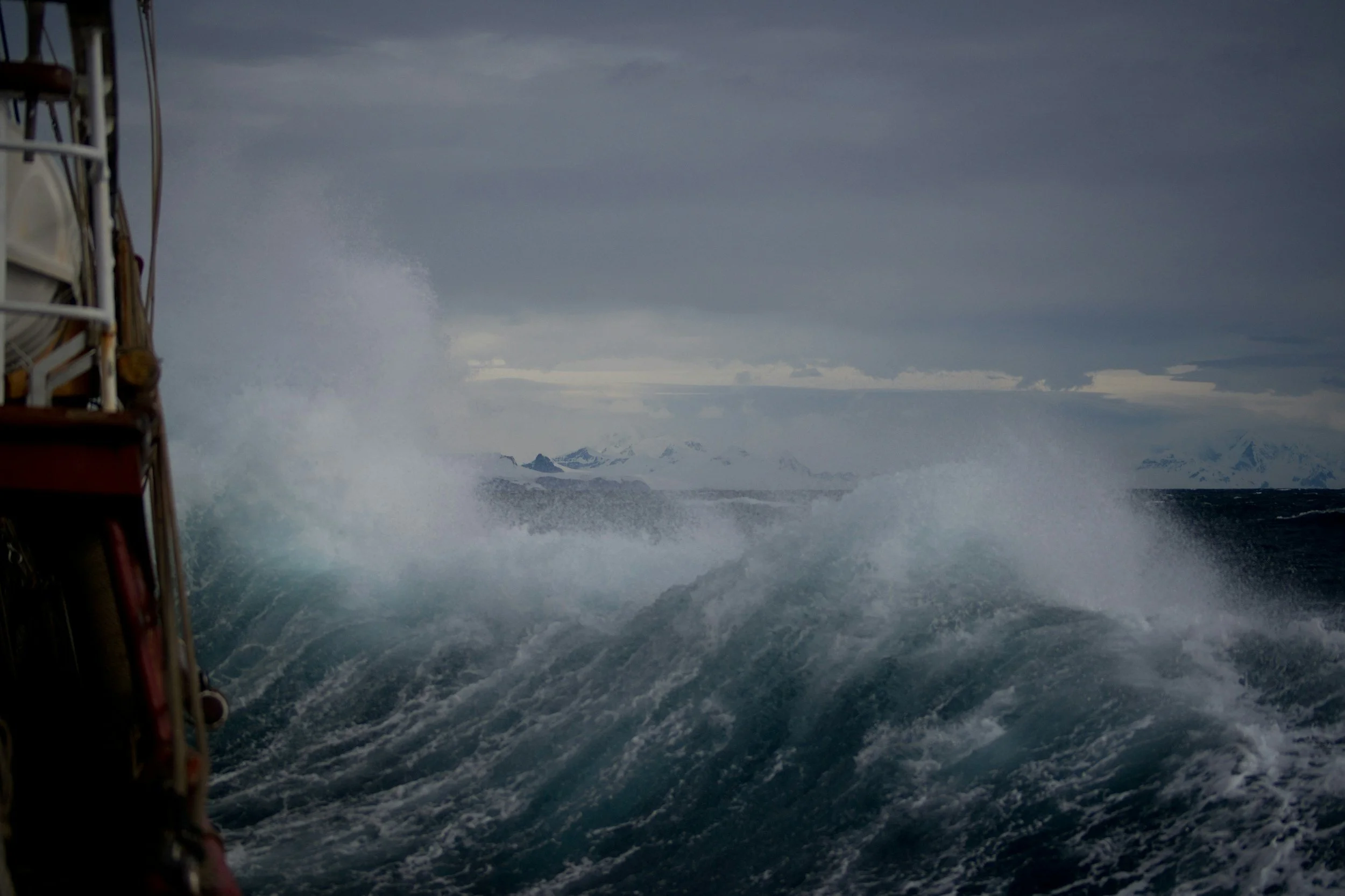
First, consider how Nolan made the film. The Cyclops is a 60-foot animatronic puppet standing in front of an actual camera. The storm scenes were shot on a wooden ship in an actual storm, with extras clutching the railing and, reportedly, vomiting over it. (A production detail no insurance broker enjoys, and one that every viewer can somehow feel through the screen.) The Sirens are small figures glimpsed at a distance, because that is how a frightened sailor would see them. You can call this nostalgia for analog technique if you like. I call it a method for getting reality into the work. The texture people are now flying across the country to watch on a 70mm print was earned the unpleasant way: by being there.
The transfer business
I have argued elsewhere that art begins in experience. A person lives through something. She sees a coastline in a particular light, or she spends a night convinced the sea is trying to kill her. Then she transfers that experience into a different domain: into music, paint, film, language. The transfer is the creative act. Whatever arrives in the new medium was never in the medium before, because its source sits outside the medium entirely. That is what novelty is. Homer's epic, whoever Homer was, encodes centuries of accumulated seafaring dread. Nolan's version encodes, among other things, what a pitching deck in the Aegean does to your inner ear, because he went and found out. There are cheaper ways to make a movie. There may be no other way to make that one.
A generative model has no such source. It makes art because it is asked. It has nothing to express, because nothing has ever happened to it. Its raw material is the archive of what humans have already transferred into media, and its operation is recombination within that archive. The recombination can be executed with real fluency, and I am on record admiring the machinery. But the loop moves material from the medium back into the medium and never once touches the world. Which is why the Grok clip looks the way it looks: like the weighted average of every sword-and-sandal frame ever uploaded. Kitsch is what you get when the transfer function has no input except other art.
You don't have to take my word for it
Now, an argument about art from a founder building AI is exactly as trustworthy as it sounds, so let me make it falsifiable. If these systems truly created from first principles, their performance should hold up wherever the training material runs out. So does it? Conveniently, there is a domain where the boundary of the archive can be located with precision, and it happens to be the domain where the models look most superhuman: code.
Start with LiveCodeBench, a benchmark that timestamps every programming problem and evaluates models only on problems published after their training cutoff. The results are something to behold. DeepSeek's coding model scored around 60 percent on LeetCode problems that existed before its cutoff, and dropped to nearly zero on problems released afterward. Same difficulty, same format, same model. The only variable was whether the model could have seen the problems before. In any school on earth, that gap has a name, and the name is cheating off last year's exam.
The pattern repeats across programming languages. A survey of 111 studies documents a stubborn performance gap between high-resource languages like Python and low-resource ones like R, Racket, or COBOL. Between Python and Racket, the model stays exactly as clever. The only thing that shrinks is the pile of prior examples. A follow-up study on fixing the gap carries a title that summarizes an entire research field with admirable honesty: "No Silver Bullet."
It gets better. Enterprises build software on internal libraries whose APIs appear in no public corpus, and this is precisely where the models fall apart in practice: they hallucinate functions and invent packages that do not exist. Surely, you would think, handing the model the complete documentation fixes this. It does not. Even with perfect retrieval of every relevant API document, the models keep producing broken invocations. Another research group condensed the finding into their paper's title: "To See is Not to Master." Any student who ever skimmed the textbook the night before an exam could have confirmed this for free, but I am glad we have it peer-reviewed now.
And when researchers construct tasks that resist memorization altogether, the ceiling drops through the floor. The ARC-AGI benchmarks test whether a system can acquire a skill it was never prepared for, using puzzles designed to be useless to pattern retrieval. The 2025 competition on ARC-AGI-2 was won with 24 percent. Ordinary humans solve these puzzles between two sips of coffee.
One pattern, wearing two costumes
Let me be precise about what this evidence shows, because I do not want to overclaim. Where the archive is thick, current systems shine, and their usefulness there is real. I use them daily. But where the world outruns the archive, they thin out fast. A freshly published problem or an unseen internal library: each is a miniature version of the situation every artist faces by definition, the situation of standing in front of something for which no prior material exists. Novelty is exactly the region these architectures cannot reach, because their entire capability was fixed at training time, from records of a world that has since moved on.
So the aesthetic judgment and the benchmark data turn out to be the same finding in two costumes. Nolan's film works because people put themselves in contact with reality and carried something back. The benchmark scores collapse because the systems were never in contact with anything. Both point at the same structural fact about how these machines learn: everything in advance, and nothing afterward.
Musk may well ship his AI Odyssey by December. It will resemble everything we have already seen, which is the one thing the original epic never did. Meanwhile, audiences are paying scalper prices for a story about a man who spent ten years being changed by the world before he came home. They seem to understand instinctively what the evaluation data confirms in tedious detail. The interesting work, in art as in engineering, happens at the boundary where experience is still being acquired. The Cyclops was a puppet. Somebody had to build it.
Tim Gülke is one of the founders and CEO of Wakeline, a German deep-tech company working on continual learning. Which means, yes, he has a professional stake in the idea that learning should not stop after training. Discount accordingly.